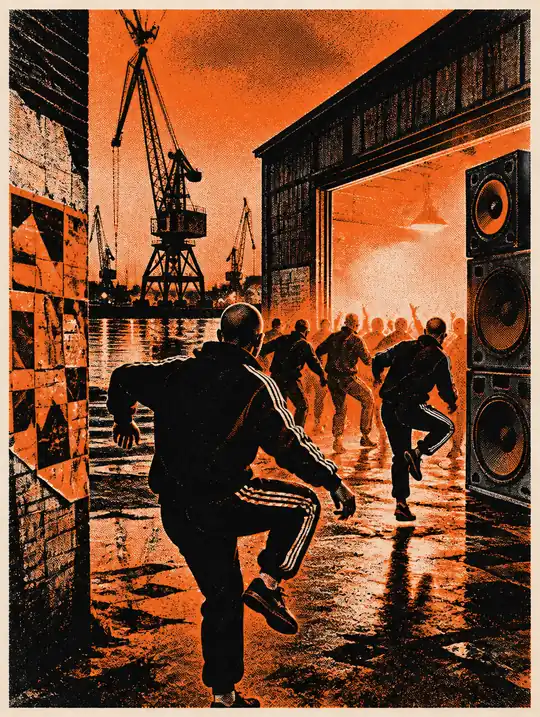
At the end of the 1980s house music reached the Netherlands the way it reached everywhere: through a few clubs, a few record shops and a lot of kids who heard it once and could not go back. Amsterdam got it first, in the late summer of 1988, and dressed it up, with warehouse parties, squats and clubs where the door mattered. Rotterdam, the port city of docks, cranes and post-war concrete, took the same records and asked a ruder question. Can it go harder?
The parts were already lying around. Acid. Belgian new beat and its heavier offspring. Techno, rave, hip hop samples, film dialogue. In 1991 the Belgian duo T99, who came out of new beat, released Anasthasia, and its riff became one of the building blocks of early hardcore. In Frankfurt, Marc Acardipane had released We Have Arrived under the name Mescalinum United, a record often called the first hardcore track ever made, and Brooklyn DJ Lenny Dee put it out in America on his label Industrial Strength.
Rotterdam did not invent the ingredients. It invented the attitude: faster than everyone else, louder than everyone else, and proud to be from Rotterdam and not from anywhere else.
The villa under the Euromast
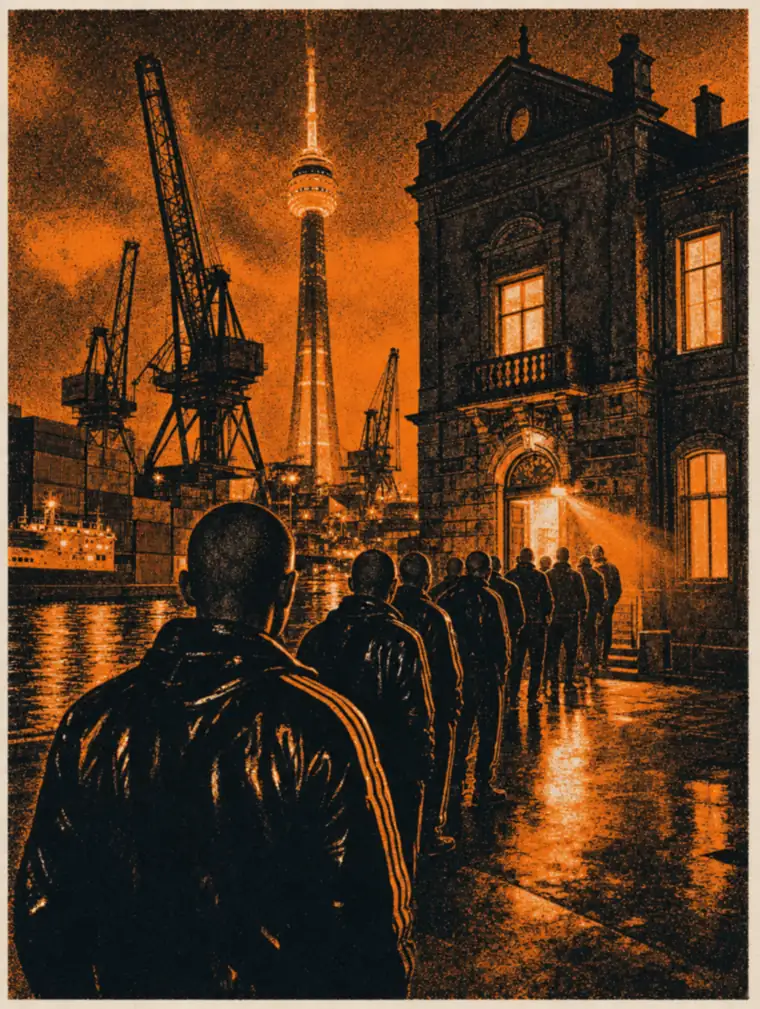
The first home was Parkzicht, an old villa turned discotheque in the park below the Euromast. From December 1989 DJ Rob had the Friday night, and week after week he pushed the music further than the crowd thought it could go. The people on that floor were young and local, many of them Feyenoord supporters and kids from the outer districts, and nobody was there to be seen. They were there to go faster.
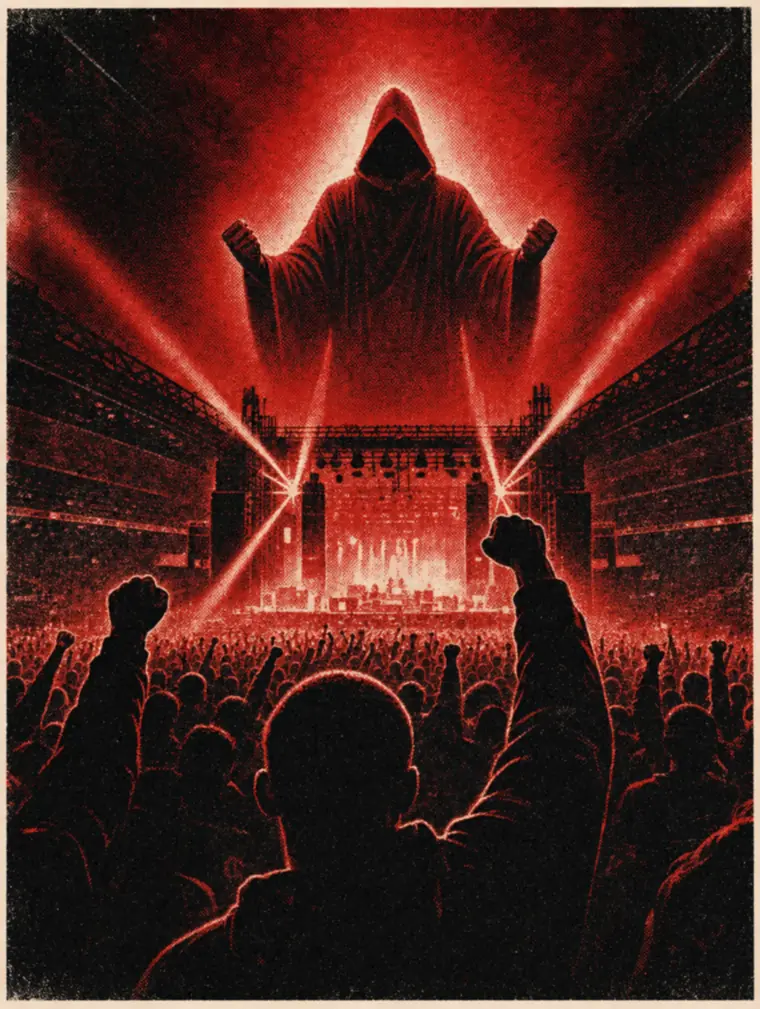
Paul Elstak, a Rotterdam club DJ since the late 80s, started organising nights with DJ Rob. On 4 December 1992 they ran the first A Nightmare in Rotterdam at Parkzicht. When the numbers outgrew the villa they moved to the Energiehal, a hall the regulars called the Temple, where the Nightmare nights pulled up to 15,000 people.
Parkzicht itself did not make it to the end of the decade. DJ Rob left in 1995, and after two shootings in 1996 the mayor of Rotterdam closed the club. By then the sound had long since left the building.
A word from the other city
Gabber is Amsterdam slang. It comes from Bargoens, the old Dutch street language, which borrowed it from the Yiddish khaver: friend, mate, buddy. In Amsterdam it was an everyday word. Pointed at Rotterdam, it was a sneer.
The story the scene tells goes like this. An Amsterdam DJ, asked about the hard stuff coming out of Rotterdam, waved it away: just a bunch of gabbers having fun. Rotterdam heard the insult and kept it. A Euromasters record carried the reply, and it is still the best answer anyone ever gave: Gabber zijn is geen schande. Being a gabber is no disgrace.
Amsterdam fired back with its own label, Mokum Records, which founder Freddy B started as a humorous response to Rotterdam Records. Mokum is the Yiddish name for Amsterdam. So the two cities spent a decade fighting with words from the same old street language. It was a rivalry like football: loud, funny, very local, and fought mostly on vinyl.
Gabber zijn is geen schande!
Rotterdam Records
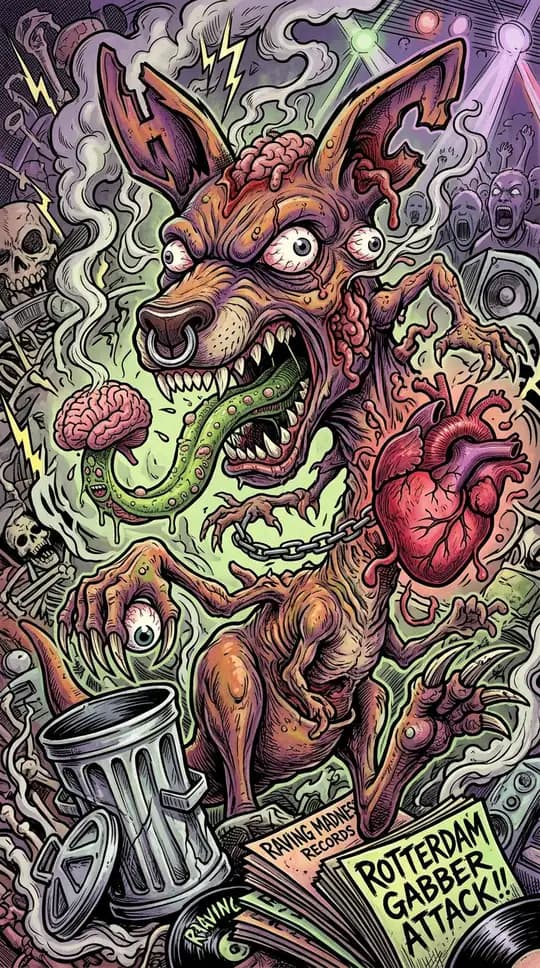
In 1992 Paul Elstak was working at the Mid-Town Records shop in Rotterdam, and under its flag he started Rotterdam Records, the first Dutch label for this music. Its first release, catalogue number ROT 001, came from Euromasters, a project named after the Euromast: Amsterdam waar lech dat dan? In Rotterdam dialect, roughly: Amsterdam, where is that supposed to be?
It was cheeky, it was crude and it worked. Rotterdam Records became the reference label of the early sound, and records like Poing by Rotterdam Termination Source crossed from the halls into the national charts. Elstak himself later took the brighter, more melodic side of the sound to the radio with tracks like Rainbow in the Sky.
The label outlived its own era. Elstak left around the turn of the millennium and started Offensive Records, DJ Neophyte and DJ Panic took over Rotterdam Records and its sister labels, it stopped in 2012 when Mid-Town Records went bankrupt, and it came back in 2018.
Amsterdam had its own fire. The Multigroove crew threw illegal parties in squats and warehouses in 1991 and 1992, and the Dreamteam, Dano, The Prophet and Buzz Fuzz from Amsterdam with Gizmo from The Hague, became the most famous DJ group of the decade. The rivalry was half serious and half theatre, and it pushed both cities to play harder.
From a club to a country
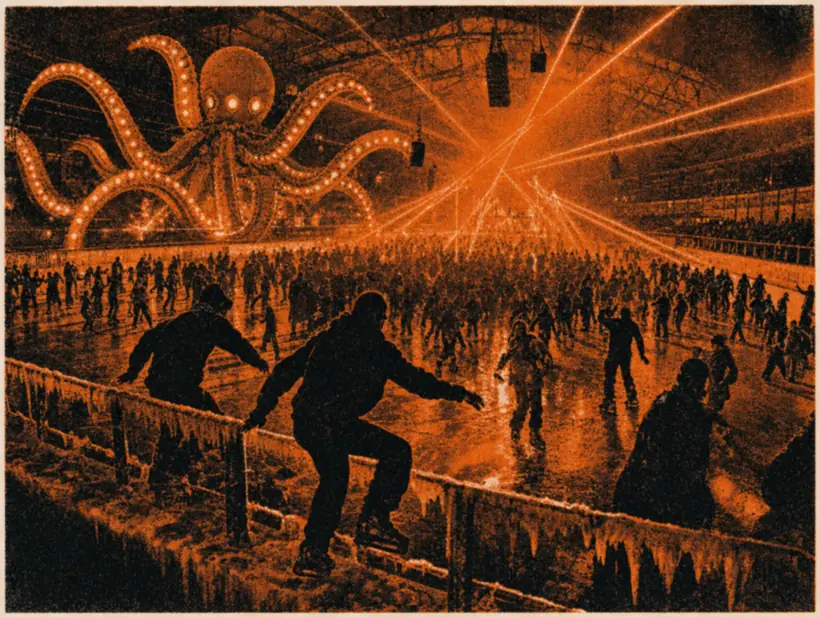
In October 1992 a brand new company called ID&T put the sound in an ice skating arena in Heerenveen and called it Thunderdome. More than 30,000 people came. From there it went national: compilations, merchandise, TV, tours.
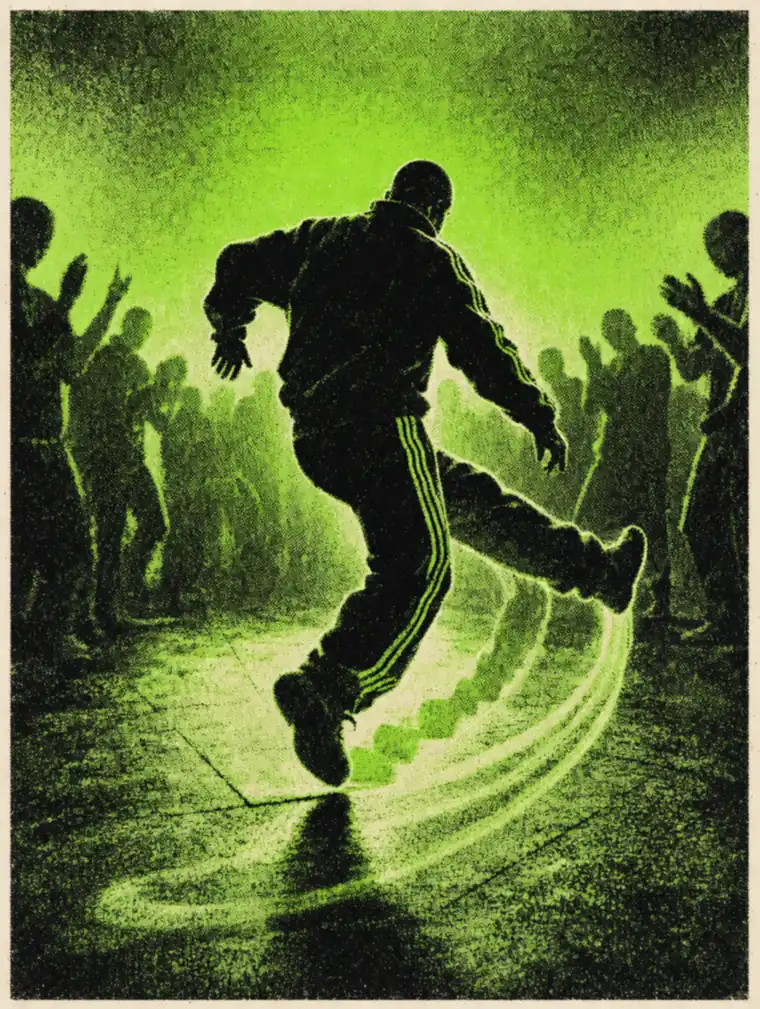
By the middle of the decade gabber was the biggest youth culture in the Netherlands. It had a uniform (Australian tracksuits, Nike Air Max BW, shaved heads), a dance, hakken, and a long list of enemies in the press. It also had parodies, and in 1996 the novelty hits that mocked it climbed the charts. For the people who were there, that was the beginning of the end of the first era.
But it was only the first. The sound had already travelled: to the rave scenes of the UK, Spain, Italy, the United States and Australia. An Italian writer once called gabber the only Dutch youth culture ever exported with real success. At home the music went back underground, mutated, slowed down and sped up again. Today the Dutch centre for intangible heritage describes gabber culture on its own page, and kids hakken all over Europe to a sound that started in a villa under a tower, with a crowd that turned an insult into a name.
 Read it? Prove it.Culture QuizFive questions a week from this issue · 300 XP
Sources · 16Where we got it
- 1.Google Arts & Culture, Netherlands Institute for Sound and Vision
- 2.Wikipedia: Gabber
- 3.De Kroniek
- 4.Rotterdam Style
- 5.Wikipedia: Rotterdam Records
- 6.Wikipedia: Euromasters
- 7.Il Post
- 8.Rolling Stone Italia
- 9.Wikipedia: Mokum Records
- 10.Mokum Records
- 11.Dutch Centre for Intangible Heritage
- 12.Wikipedia: T99
- 13.Wikipedia: Marc Trauner
- 14.Wikipedia: DJ Paul Elstak
- 15.The Guardian
- 16.Design Museum Den Bosch
Quotes in other languages are translated by us. Where the sources disagree on a date, we leave the date out. Spotted something wrong? Write to Info@hardcoremania.com and we fix it.
 Nr. 02