One word, two meanings
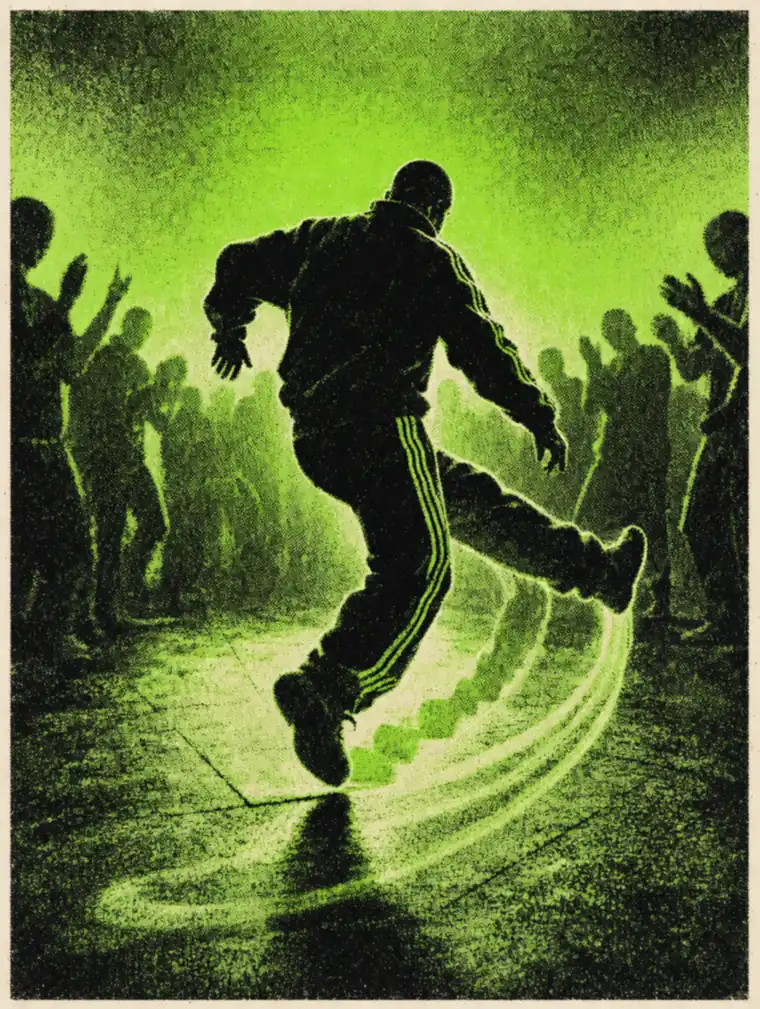
Hak is Dutch for heel. Hakken is the plural, and it is also the verb for chopping, like chopping wood. Dancers will tell you both meanings are right: the steps land on the heel, and the legs chop the air. Alberto Guerrini, the Italian DJ and archivist behind Gabber Eleganza, puts it best.
The dance grew up with the music on the floors of the early 90s, and it quickly became as recognisable as the sound itself. The Dutch centre for intangible heritage lists the hakke dance as part of gabber culture, and the music even got a nickname from it: hakmuziek, music to hakken to.
Named after the way the dancers cut the air with their legs and arms.
Built for the kick
Hakken makes sense once you hear what it answers to. In hardcore the distorted kick drum is the whole beat, and it never lets up. Design Museum Den Bosch sums the dance up in one line: small steps, taken very quickly, to the rhythm of the bass drum. The lower body does the work. Arms and torso are free to do whatever they want.
Speed explains the shape. The heritage description puts classic hardcore between 160 and 180 BPM, and the music easily runs to 190 and far beyond. Big steps cannot keep up with that, so the steps stay small. The nights were long too: dance parties could easily last ten hours, as Design Museum Den Bosch notes, so the dance had to be efficient enough to survive until morning.
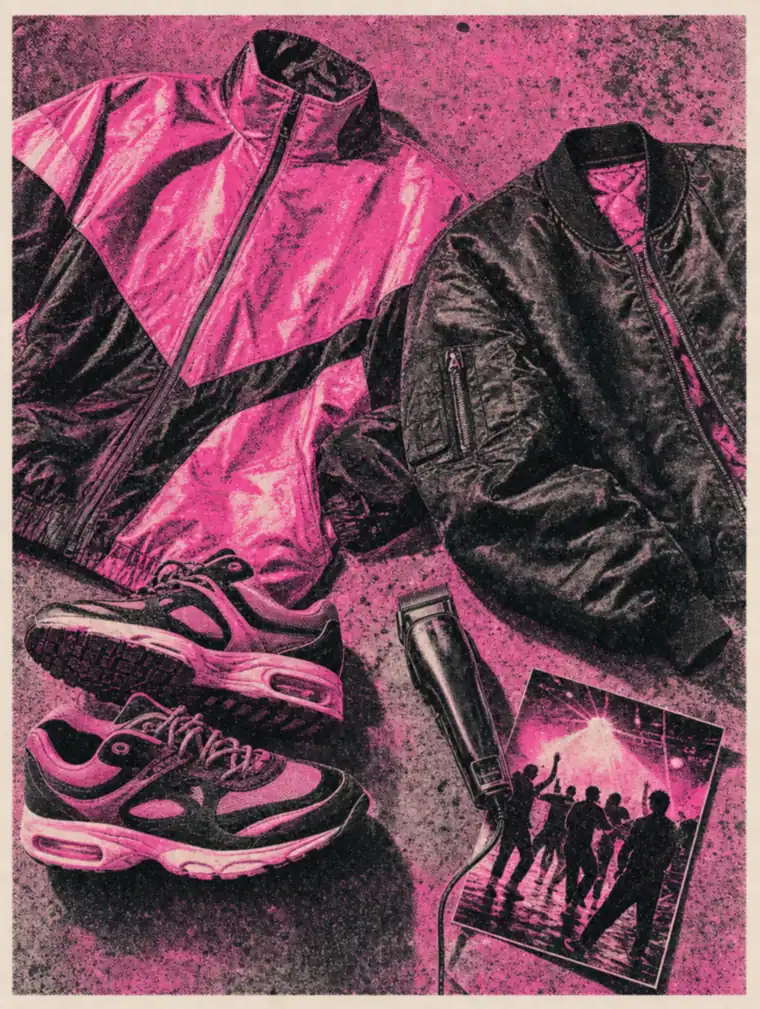
It also explains the shoes. “When you are doing the hakke you are mostly dancing on the heel, so that part had to be really cushioned,” Guerrini told END. That is a big part of why the Nike Air Max BW, with its big Air window under the heel, became the gabber shoe.
The basic step, honestly explained
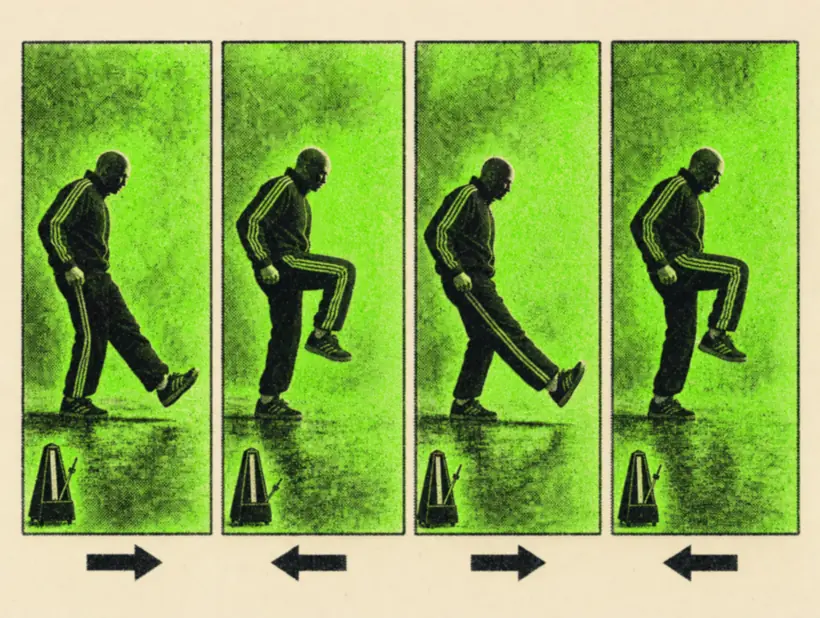
Nobody learned hakken from a manual. You learned it by copying the person next to you until your legs gave up. But if you want a starting point, here is one. Pick an early hardcore track, somewhere around 160 to 170 BPM, not a 200 BPM uptempo monster. Stand tall, knees soft, weight over the middle of your feet. Ten minutes a day in your room is enough to start. Your calves will tell you when to stop, and they will be right.
The core is a swap on every kick. One foot stays under you and does a small bounce. The other kicks forward and taps down on its heel. On the next kick they change roles. Keep it low and keep it small: the faster the music, the smaller the step. When the swap feels automatic, add the twist, turning heels and toes in and out as you travel, and you are into the shuffle every hardcore floor knows.
The classic beginner mistakes are always the same. Stomping flat-footed, which kills your knees and makes you look heavy. Watching your feet instead of the floor. Going big instead of going fast. Small, light and on the kick beats big and late every time.
Then make it yours. Arms are free: fists up, pointing, pumping. Film yourself, because what feels fast often looks slow. Wear cushioned shoes, drink water, and do not try to win the whole night in the first ten minutes.
From the circle to the stage
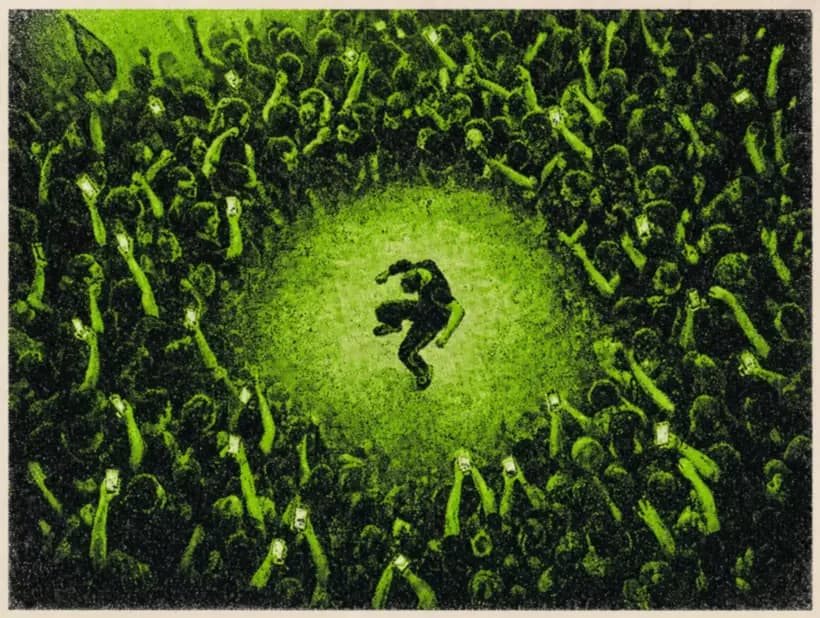
The real competition has always been the circle. Someone opens space on the floor, someone steps in, the crowd decides. No judges, no points, just respect, or the lack of it.
In the last decade hakken has also climbed onto theatre stages. Gabber Eleganza’s The Hakke Show puts a crew of hakke dancers on stage in a format somewhere between a rave and a contemporary dance piece. It has played festivals like Sónar in Barcelona, C2C in Turin and Pitch, and the Volksbühne theatre in Berlin. It brought the dance into rooms that never had a gabber in them.
Today people hakken to almost every hard style: hardstyle, rawstyle, uptempo, frenchcore. Each one pulls the steps in a different direction. A frenchcore floor rolls, an uptempo floor hammers, an early hardcore floor bounces. The base underneath stays the same.
Viral, again
In 2024 Joost Klein’s Europapa, the Dutch Eurovision entry, broke into a hardcore rave halfway through, and the internet discovered hakken. His tutorial video passed five million views, VRT reported. The track was co-written and co-produced by Paul Elstak, the man behind Rotterdam Records, who got the Netherlands’ Gouden Harp music award the year before.
Opinions split. In Belgium, musicologist Stijn Van de Voorde saw it kindly: the new fans, he told VRT, are not laughing at the genre, they are mostly just having fun with it. Not everyone was so relaxed. “Some in the scene will certainly see this as a poor imitation of the real thing, and consider it as appropriation of their culture,” said Julian Schaap, a researcher at Erasmus University Rotterdam. Elstak admitted he heard grumbling from purists who do not want happy hardcore to get too big.
The scene has been here before. In 1996 Gabber Piet’s Hakke en Zage, a parody of the dance, reached number 2 in the Dutch charts, and gabbers took it as an insult. The difference this time is that some of the kids who learned the step from a phone will end up in a real circle, at a real party, with a real kick under their feet. That is where hakken is graded. It always was.
 Read it? Prove it.Culture QuizFive questions a week from this issue · 300 XP
Sources · 14Where we got it
- 1.Wikipedia: Hakken
- 2.Mixmag
- 3.END. Features
- 4.Dutch Centre for Intangible Heritage
- 5.Design Museum Den Bosch
- 6.Rotterdam Style
- 7.Sónar Lisboa
- 8.RRR
- 9.Volksbühne Berlin
- 10.VRT NWS
- 11.Erasmus University Rotterdam
- 12.JFK
- 13.Wikipedia: DJ Paul Elstak
- 14.Wikipedia: Gabber Piet
Quotes in other languages are translated by us. Where the sources disagree on a date, we leave the date out. Spotted something wrong? Write to Info@hardcoremania.com and we fix it.
 Nr. 02