The hangover
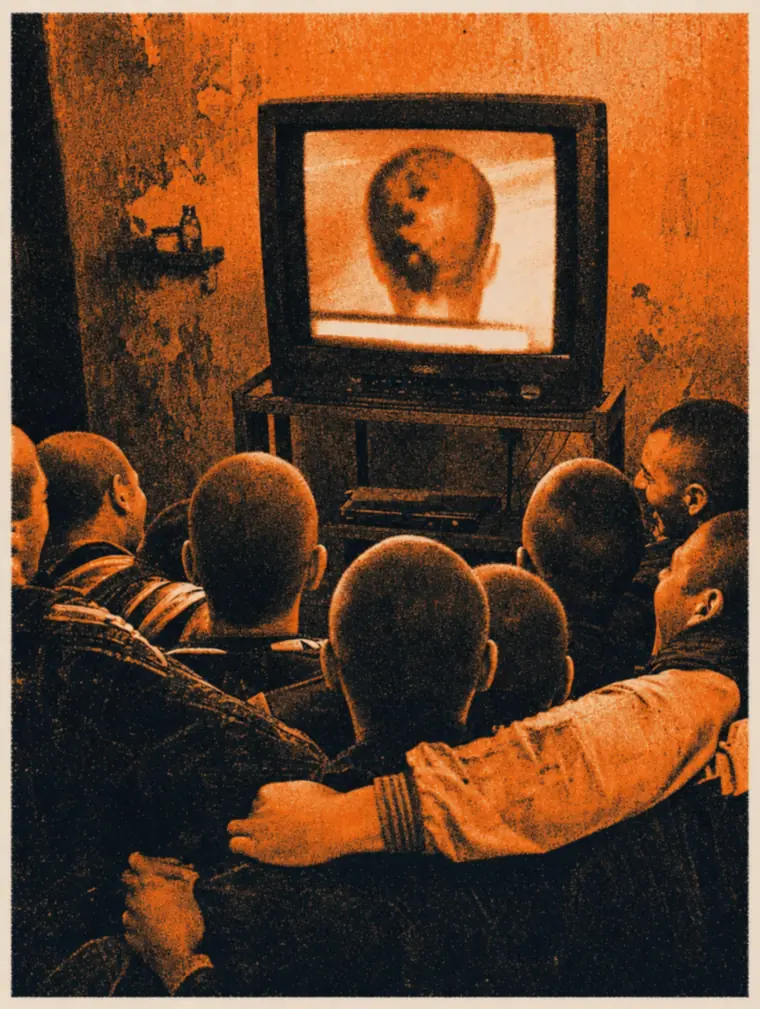
By the end of the 90s the first gabber wave had burned out. Parodies in the charts, the press on the scene’s back, the big nights getting smaller. The Netherlands Institute for Sound and Vision names the killers plainly: media profiling, commercial exploitation and parody. ID&T did not even release a Thunderdome CD in 2000.
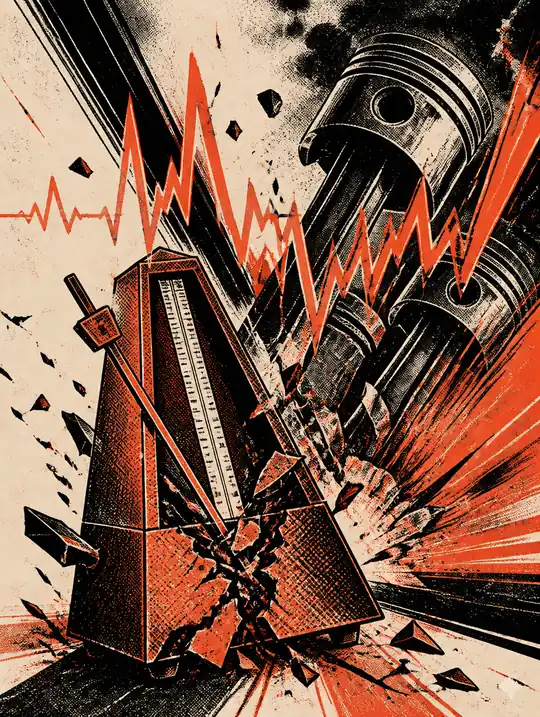
In Italy, as the quote below says, the opposite was happening. In Holland the way back went through the dark: ID&T released EPs by DJ Promo with a darker, rawer sound inspired by Marc Acardipane and the early records of PCP in Frankfurt, and Dutch hardcore was, in the Institute’s words, (re)born. Promo went on to program Thunderdome in the early 2000s.
Around 2000 hardcore in Holland had hit an all time low, so much that many producers started making hardstyle, while in Italy the opposite happened: there was a real explosion of the genre.
Darker, heavier, bigger
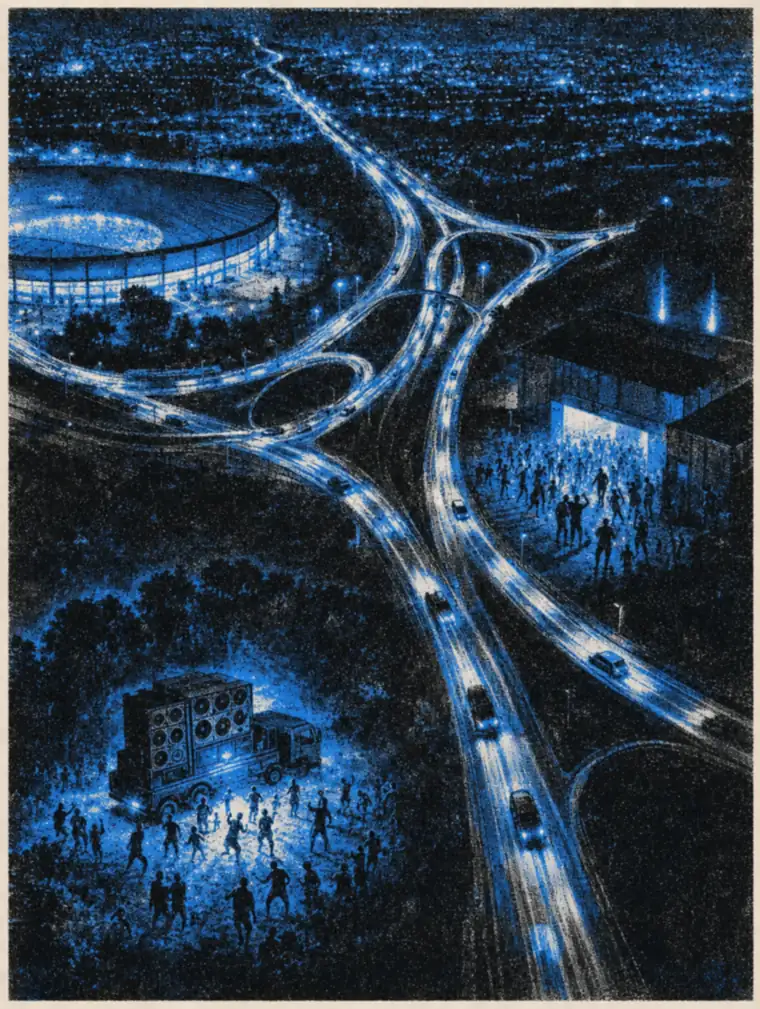
The sound that came out of the crash was darker, and through the 2000s it grew back into something built for rooms the size of aircraft hangars. In Italy this was the age of millennium hardcore, and artists like Mad Dog made their names in that era. From there grew the festival hardcore of today, played for tens of thousands of people by headliners like Angerfist on the main stage of Thunderdome.
The best map of how wide the family has become was drawn by Thunderdome itself. In 2019 the event had six areas: the Thundergods room playing the slower early rave sound with the Dreamteam, a Heroes of Hardcore area for the darker sound that rebuilt the scene after the crash, and a Tunnel of Terror blasting more than 200 BPM. Same wizard, six different speeds.
France, the free party and the roll
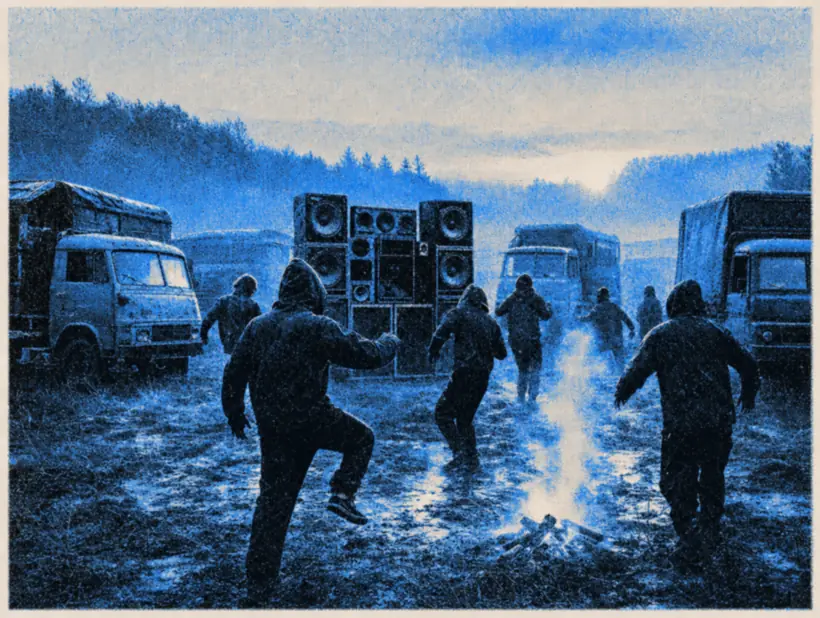
Frenchcore was born far from the Dutch arenas, in the French rave and free tekno scene of the 90s: illegal parties in fields and warehouses, run on sound systems that arrived by truck. Micropoint, founded in 1992 by DJ Radium and Al Core, is usually named as the first frenchcore act. Radium went solo in 1994 and in 1996 founded Psychik Genocide, one of the first labels dedicated to the sound. Micropoint’s albums Neurophonie (1999) and Anesthésie Internationale (2000) helped spread it.
The early sound leaned on industrial loops, percussion, vocal chops and rhythmic effects, often with French samples. Its signature is the offbeat bass: a loud, distorted bassline between the kicks that makes the whole track roll forward instead of just hitting. The tempo sat high from the start, usually between 180 and 240 BPM. From the mid 2010s producers began pitching the kick and the bass into notes, the way hardstyle and mainstream hardcore do, and that opened the door to melodies.
The Dutch take it to the main stage
In the 2010s frenchcore found its biggest crowd in the Netherlands. Dr. Peacock, born Stefan Dekker in 1988, grew up on old Thunderdome compilations, discovered frenchcore records by The Sickest Squad and DJ Radium in the mid 2000s and started producing in 2010, with a sound faster and more melodic than the mainstream hardcore of the time. In 2011 the first Frenchcore, s’il vous plaît event took place in Culemborg. In 2014 Defqon.1 gave the genre its own stage.
Then came the melodies. Around 2016 a euphoric frenchcore started borrowing from hardstyle. Dr. Peacock toured the United States in 2016, founded the label Frenchcore Worldwide in 2017 and in 2019 became the first frenchcore act ever to play Qlimax. His protégé Sefa released Leven is Lijden in 2018, a track that brought a lot of hardstyle fans over to the sound. Peacock also built a live show, Peacock in Concert, where hardcore meets classical instrumentation on the same stage.
The French founders and the Dutch stars do not always sound alike, and their fans argue about it. That is fine. The roll survived the trip.
Uptempo and the 200 club
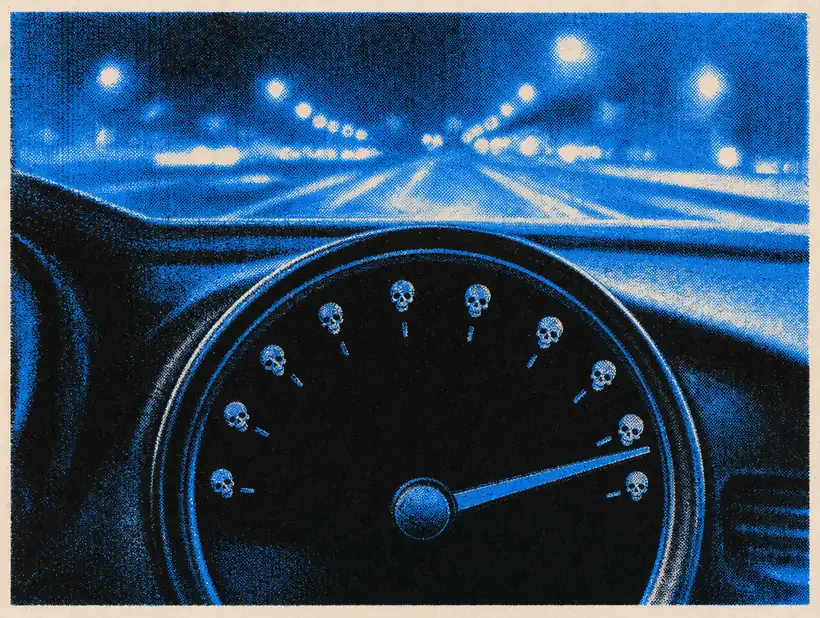
In the early 2010s the Netherlands produced another answer, this time to the question of speed. Uptempo usually runs between about 185 and 220 BPM: aggressive distorted kicks, very little melody, tracks that are often over in two to three and a half minutes. In the late 2010s it added the piep kick, a highly filtered, sharp punch that sounds exactly like its name.
Partyraiser, born Wesley van Swol in Delft, is the producer most often credited with starting it: the story goes that he began by speeding up the B-sides of hardcore records, until the speed became a style of its own. Labels like Partyraiser Recordings, Barbaric Records and Offensive Rage built the scene around it.
Beyond uptempo sit terror and speedcore, where the tempo goes past what most people can dance to, and that is the point. At Thunderdome 2019 the main room ended with a sweaty closing set from “Grandpa” Drokz, pillars of flame shooting up from the stage.
Back to the start
The twist of the last ten years: the fastest generation in hardcore history fell in love with the oldest sound. Gabber had a major resurgence in the late 2010s, and early hardcore parties filled with kids who were not born when Parkzicht closed. “Today the old-school Australians are mostly worn by a dedicated younger crowd who are into the underground early hardcore sound,” says Bobby Jacques, who was there the first time.
Thunderdome reads the same map. Its Antwerp edition on 11 and 12 December 2026 gives the whole Friday to the golden era of the sound and the Saturday to the past, present and future together.
So here is the scene today: a 200 BPM uptempo kid, a frenchcore wave, a mainstream hardcore crowd and a fifty year old in an original Aussie, all at the same party, all arguing about which of them is the real hardcore. That argument is the scene. Long may it last.
 Read it? Prove it.Culture QuizFive questions a week from this issue · 300 XP
Sources · 15Where we got it
- 1.Google Arts & Culture
- 2.Zero
- 3.Wikipedia: Thunderdome (music festival)
- 4.The Guardian
- 5.Wikipedia: DJ Mad Dog
- 6.Festivalinfo
- 7.Wikipedia: Frenchcore
- 8.Wikipedia (FR): Frenchcore
- 9.Wikipedia: Dr. Peacock
- 10.Dr. Peacock
- 11.Wikipedia (FR): Uptempo (genre musical)
- 12.Festt
- 13.Boiler Room
- 14.Wikipedia: Gabber
- 15.Festivalinfo
Quotes in other languages are translated by us. Where the sources disagree on a date, we leave the date out. Spotted something wrong? Write to Info@hardcoremania.com and we fix it.
 Nr. 02