The headline version
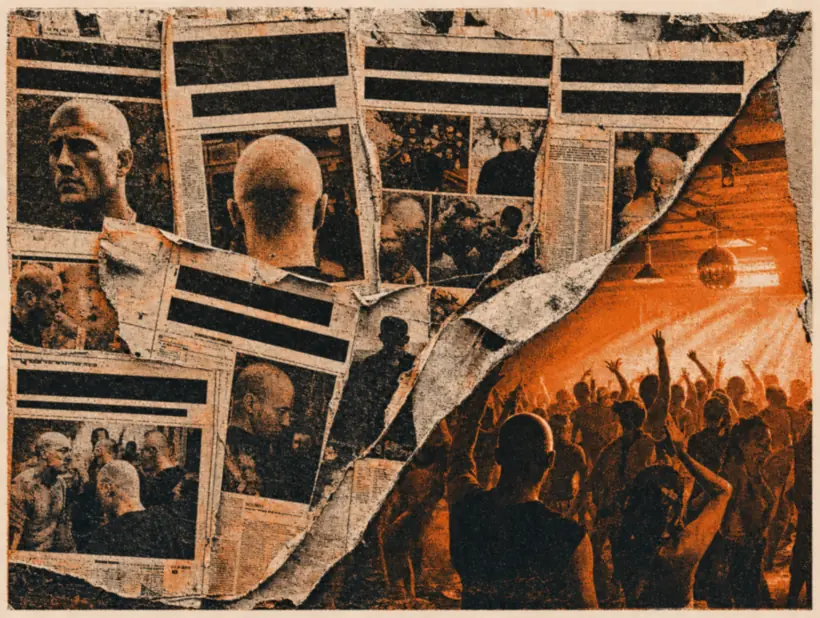
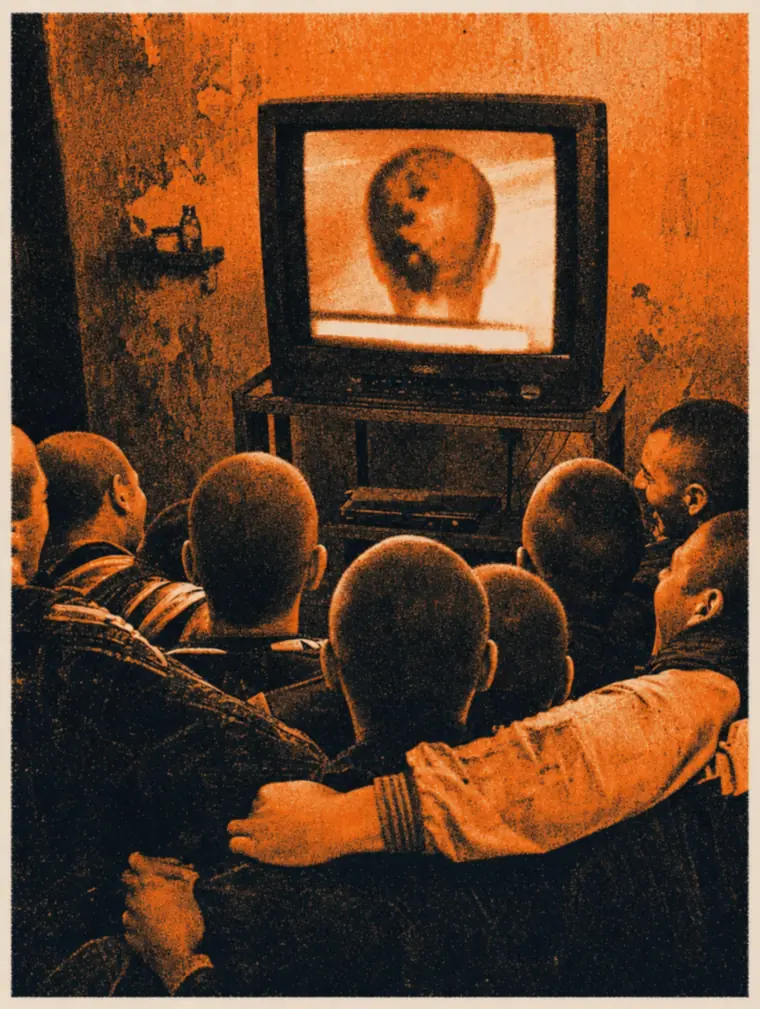
If you only knew gabbers from the 90s papers, you knew four things: drugs, football hooligans, racism and noise. The Guardian, looking back in 2019, put it plainly: the press sensationalised the excesses of gabber culture, with stories about drugs, football hooliganism and racially motivated violence. Gabbers had shaved heads, so they looked like skinheads, and that was enough for a headline.
“They continually tried to relate it to drugs, gangs, proto-fascism and anti-social behaviour,” says Alberto Guerrini of Gabber Eleganza. The scene has a word for the people who ended up on the news. “The gabbers who showed up on the news are what I’d call in Dutch ‘Zwabbers’, or wannabe gabbers,” says Zanjay Chattarpal.
Every stereotype has something real underneath, and pretending otherwise would be its own kind of lie. So let us take them one at a time, and let the people who were there do most of the talking.
The politics fight, honestly
Yes, there was a racist minority. The Dutch antifascist research group Kafka documented it: gabbers giving interviews full of xenophobic ideas, far right symbols like the Celtic cross turning up in the scene, and extremist groups trying to recruit. Guerrini does not hide it either: the connections to right-wing or fascist culture, “which of course it had, but isn’t what it was about.” “Media would focus on the loud, racist minority which got regular people to fear gabbers even more,” says Boris Postma.
The scene fought back. Kafka itself records an organisation of gabbers against racism and fascism, and notes that racist gabbers faced growing opposition from their own ranks through the 90s. The Amsterdam label Mokum printed an anti-racist, anti-fascist slogan on its records, calling on gabbers to stand united against both. And the man behind Rotterdam Records, Paul Elstak, has Surinamese roots.
When the Lonsdale panic hit in the 2000s, the Dutch security service AIVD looked into it and concluded in 2005 that the vast majority of young people wearing the brand had no political ideology at all. The official Dutch heritage description of gabber culture calls it apolitical: it is about having fun, finding people like you, dancing and expressing yourself.
Drugs: yes, and?
Nobody serious denies it. Ecstasy and speed were part of the 90s halls, and Design Museum Den Bosch says so in its own history of the scene: thousands of people dancing in sports halls, fuelled by speed and ecstasy. There were deaths too, and the press covered them.
What the scene rejects is the idea that this was the whole story. That idea left scars. The Guardian noted in 2019 that the long negative profiling by outsiders had marked the scene, and that it took the work of scholars, researchers and artists documenting gabber history to start removing the stigma. Every big youth culture of the last fifty years had its drugs. Only some got reduced to them. The people who were there remember the music first, then the friends, then the clothes, then the dancing until the lights came on. A drugs-only story is easy to write, and it misses all of that.
“It’s just noise”
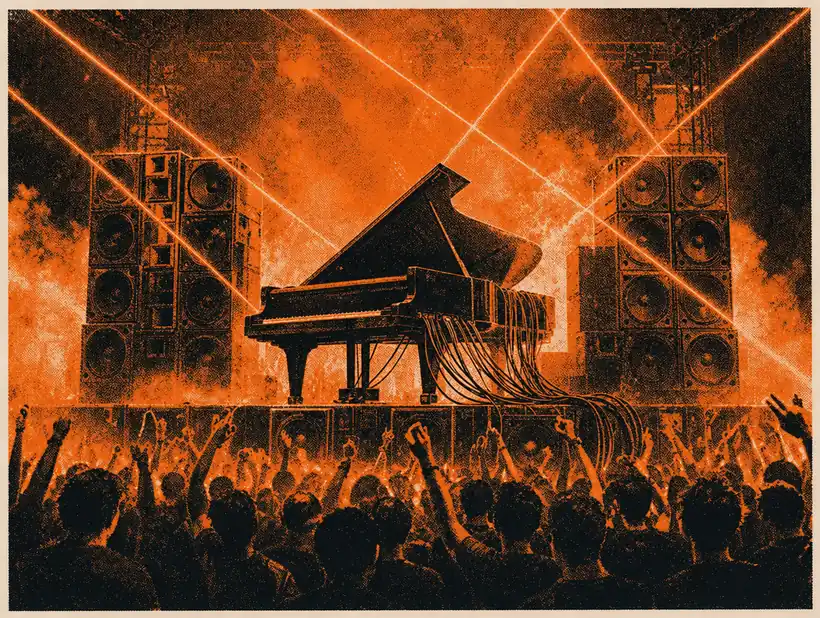
Tell that to Aphex Twin, who remixed Marc Acardipane’s We Have Arrived, the track often called the first hardcore record, and put two versions on his album Classics. Tell it to Dr. Peacock, who built a live show around classical instruments. Tell it to Jim Taihuttu, whose 2023 film Hardcore Never Dies follows a classically trained pianist pulled into his brother’s gabber world in 90s Rotterdam.
Or tell it to the Dutch music industry, which gave Paul Elstak its Gouden Harp award in 2023, a prize for people who meant a lot to Dutch music. A year later Elstak co-wrote and co-produced Europapa, the song that took a hardcore rave to Eurovision. The noise turned out to be one of the most influential sounds the Netherlands ever exported, and the Dutch centre for intangible heritage now gives gabber culture its own page, next to traditions that are centuries old.
Class, and us against the rest
Gabber was born working class and proud of it. As the sociologist Stijn Verhagen has described it, it grew among working-class kids in Rotterdam partly as a reaction to the stylish, snobbish Amsterdam house scene. In Rotterdam, the cultural marriage between hardcore, the rave world and Feyenoord’s terraces gave the scene its edge. Guerrini, whose father was a baker, found it at a village funfair near Bergamo, not at a gallery opening.
The Dutch heritage description names the attitude in two phrases: not letting yourself be made small, and a feeling of us against the rest. That is why an expensive Aussie mattered. “The Gabbers wanted to be comfortable, but in a fancy club they were always the outsiders because they’d been wearing cheap clothes,” says Guerrini. The tracksuit was dignity you could wear.
Family
The word itself tells you everything. Gabber means friend. Everything else the scene became was built on that. “There’s sense of brotherhood in Gabber which I think you find less in more mainstream scenes,” says Boris Postma.
Thunderdome is the proof. When ID&T shut it down in 2012, an employee kept it alive in secret with fan days, and an intern who had joined the radio team at eleven grew up to play it, surrounded by what The Guardian called his Thunderdome family. “In the beginning it was one big happy family,” says co-founder Irfan van Ewijk. Thirty years later it still is, with more cousins: the 2025 edition sold out, with gabbers from dozens of countries under one roof.
Gabber is something in the heart. It means friendship.
 Read it? Prove it.Culture QuizFive questions a week from this issue · 300 XP
Sources · 21Where we got it
- 1.The Guardian
- 2.END. Features
- 3.Mixmag
- 4.Boiler Room
- 5.Boiler Room
- 6.Kafka
- 7.Kafka
- 8.Kafka
- 9.Wikipedia: Mokum Records
- 10.Wikipedia: Gabber
- 11.Wikipedia: DJ Paul Elstak
- 12.Wikipedia: Lonsdale (clothing)
- 13.Dutch Centre for Intangible Heritage
- 14.Design Museum Den Bosch
- 15.Wikipedia: Marc Trauner
- 16.Dr. Peacock
- 17.Biosagenda
- 18.VRT NWS
- 19.JFK
- 20.De Kroniek
- 21.Il Post
Quotes in other languages are translated by us. Where the sources disagree on a date, we leave the date out. Spotted something wrong? Write to Info@hardcoremania.com and we fix it.
 Nr. 02